Love Nurse Embroidery Design Review
A Professional First Impression for Small Business Merch
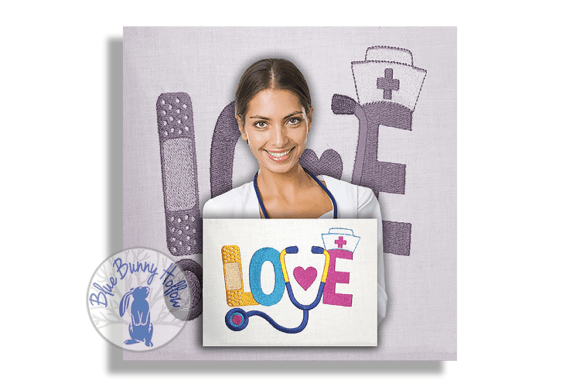
At first glance, Love nurse reads as warm, sincere, and purposefully understated — not flashy or overly decorative, but quietly confident in its message. The pairing of a stethoscope and nurse’s hat entwined with the word “Love” suggests thoughtful craftsmanship rather than mass-produced clip art. For small business owners — especially those in wellness-adjacent spaces like holistic studios, boutique pharmacies, caregiver-led gift shops, or compassionate service brands — this design lands as both professional and human-centered. It avoids cliché while honoring nursing with dignity, making it far more versatile than generic heart-and-cross motifs.
Where Love Nurse Shines in Real Business Use
This machine embroidery design excels where authenticity matters: embroidered patches for staff uniforms at a local clinic-run café, chest logos on aprons for a nurse-founded bakery, sleeve accents on linen tote bags sold at a wellness pop-up, or cap embroidery for volunteer teams at community health fairs. As a digital embroidery file, Love nurse adapts well to mid-size applications (2–3 inches wide) without losing legibility — ideal for custom apparel that balances brand visibility with subtlety.
It works especially well for handmade product branding: think stitched-on labels for herbal tea blends, embroidered tags on reusable cotton produce bags from a farm-to-table florist, or small patch applications on pet bandanas from a vet-tech-owned boutique. On tote bag design, the interwoven elements create gentle visual rhythm — enough detail to catch the eye, but clean enough to scale across multiple items in a cohesive merch line. For Etsy sellers and crafters, Love nurse supports a premium handmade presentation without demanding complex digitizing skills.
Use With Care: Practical Limits for Commercial Embroidery
While expressive, Love nurse has boundaries worth noting before production. Its intertwined elements — particularly the fine connection between stethoscope and hat — may compress or blur at sub-1.5-inch patch sizes. Cap embroidery on structured fronts demands careful test runs: curved surfaces can distort delicate joins, and dense stitching near letterforms risks puckering on lightweight twill or performance fabrics. If applied to dark uniforms or textured fabric (like canvas aprons or heavy denim totes), verify thread color contrast — light pastel threads may lack visibility, while high-contrast combinations (navy + white, black + red) reinforce professionalism and readability.
Avoid pushing stitch density too high in commercial embroidery settings unless stabilizer support is confirmed. Overly dense fills in the hat or stethoscope loops could compromise flexibility on stretch fabrics or cause stiffness on soft cotton tees. Always inspect spacing between “Love” and the icon elements — tight kerning may collapse during hooping or washing. And remember: frequent laundering (common for staff aprons or clinic-branded gear) demands secure underlay and proper thread tension — never skip the real-fabric test run.
How Love Nurse Strengthens Brand Identity & Customer Trust
For small businesses building emotional resonance — not just transactions — Love nurse contributes meaningfully to brand identity. It signals values: care, competence, empathy. When stitched onto a barista’s apron at a nurse-owned coffee shop, it subtly reinforces credibility and narrative cohesion. Customers notice that alignment. That consistency builds recognition faster than generic logos — especially when repeated across touchpoints: tote bag design, embroidered packaging accents, event merch wristbands, or even printable mockups shared on Instagram for client approval.
Unlike purely decorative embroidery files, Love nurse carries built-in storytelling. It invites conversation, fosters connection, and elevates perceived product value — whether used on a $28 linen tote or a $5 branded keychain. For crafters and digital embroidery file buyers, its clarity and warmth help differentiate their offerings in saturated markets like Etsy or local maker fairs. It doesn’t shout; it resonates. And in merch creation, resonance drives repeat engagement and word-of-mouth trust.
Essential Embroidery Designer Notes Before Production
- Always test in black and white first — assess contrast, balance, and negative space before committing to thread colors.
- Verify patch size viability — run a 1.75-inch version through your embroidery software to confirm no critical details vanish.
- Review thread color pairings on actual fabric swatches — screen previews rarely match real-world saturation or sheen.
- Inspect spacing and stroke weight — ensure “Love” remains legible beside fine icon lines, especially at smaller scales.
- Confirm hoop size compatibility with your frame system and garment placement (e.g., cap front vs. left-chest).
- Test on real fabric with correct stabilizer — lightweight tear-away for cotton, cut-away for knits, fusible for unstable weaves.
- Create a printable mockup for client sign-off — visuals prevent misalignment on sleeves, caps, or curved surfaces.
- Compare alongside other design assets — does Love nurse visually harmonize with your existing logo, fonts, and color palette?
- Confirm commercial licensing — since this is listed under Freebies and Embroidery, double-check usage rights before selling finished products or offering as part of a service package.
Final Thoughts for Merch Creators & Embroidery Shops
Love nurse isn’t just another embroidery file — it’s a strategic asset for small businesses rooted in care, community, and quiet confidence. Whether you’re an embroidery shop digitizing for local clinics, a craft studio launching branded merchandise, or an Etsy seller curating meaningful design assets, this piece earns its place in your workflow when intention meets execution. It performs best when treated as part of a larger brand story — not as standalone decoration, but as a consistent, considered expression of value. Used thoughtfully, Love nurse helps turn everyday items — aprons, caps, totes, patches — into quiet ambassadors of compassion, credibility, and craft.