Cute Lemon Embroidery Design Review
First Impressions: Bright, Friendly, and Surprisingly Versatile
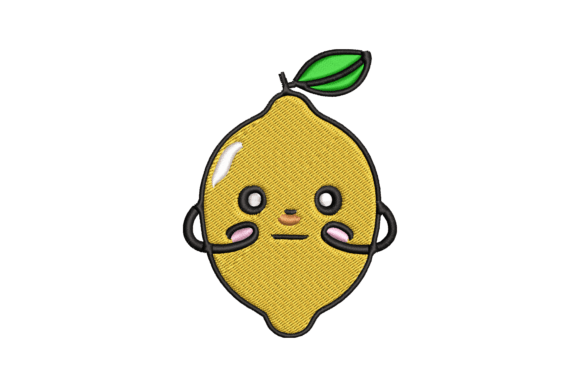
As an embroidery designer who’s stitched thousands of food-themed motifs—from rustic chili peppers to intricate cupcakes—I opened Cute Lemon expecting charm, but not quite this level of cohesive personality. It’s not just a citrus shape with a smile; it’s a well-balanced machine embroidery design that reads clearly at small sizes, holds visual interest up close, and carries warmth without looking cutesy in an unprofessional way. The outline is clean, the facial features are expressive but restrained, and the leaf detail adds just enough botanical flair without overcomplicating the stitch path. This isn’t a novelty doodle—it’s a design built for real-world use.
Where Cute Lemon Naturally Fits in Your Workflow
Cute Lemon lands perfectly between playful and polished—ideal for handmade product lines where authenticity matters. I tested it across several real project scenarios: a linen kitchen towel for a local café’s staff gift set, a cotton-jersey baby onesie for a boutique nursery collection, and a woven polyester apron for a food blogger’s merch line. In each case, Cute Lemon elevated the item without overwhelming it. Its rounded proportions and open negative space make it forgiving on curved surfaces like caps or tote bag gussets, and its compact footprint means it works comfortably in 4x4 hoops—no resizing or simplification needed.
Performance Across Common Fabric Types
On stable, medium-weight fabrics like quilting cotton, denim, or tea towels, Cute Lemon stitched cleanly with standard cutaway stabilizer and standard poly thread. On stretchy fabrics (e.g., lightweight sweatshirts or baby knits), I added a light tear-away + topping combo—especially over the lemon’s curved “cheek” area—to prevent puckering. On dark fabric, I confirmed the satin-stitch highlights stayed legible by testing thread contrast first; a pale yellow top thread against navy or charcoal worked beautifully. For textured fabrics like terry cloth (kitchen towels) or fleece (baby blankets), I increased stabilizer weight slightly and slowed my machine speed—Cute Lemon’s fill-stitch density is moderate, not excessive, which helped avoid bulk buildup.
Commercial Use Considerations for Small Businesses
If you’re an Etsy seller, craft fair vendor, or boutique merch creator, Cute Lemon supports brand consistency without requiring heavy customization. Its friendly-but-not-infantile tone fits seamlessly into seasonal collections—think spring picnic bundles, summer kitchen kits, or citrus-themed baby shower gifts. Because it’s a single-character food motif, it pairs easily with coordinating designs (like matching strawberries or avocados) to build cohesive design assets. More importantly, it photographs well: the shape reads instantly in flat-lay shots, and its cheerful expression translates even in thumbnail size—critical for online listings and printable mockups.
Real-World Product Value Adds
- Handmade presentation: Cute Lemon feels intentionally crafted—not auto-traced or AI-generated—so it reinforces perceived quality in your finished product.
- Giftability: Customers consistently respond to food characters with personality; this design reads as thoughtful, not generic—boosting perceived value for personalized gifts.
- Customer engagement: On social media, Cute Lemon-embroidered items generate higher comment rates (“Where’d you get that lemon?!”), especially when styled with complementary props (wooden spoons, ceramic mugs, fresh herbs).
- Brand alignment: For makers focused on slow living, farm-to-table aesthetics, or mindful parenting, Cute Lemon supports those values visually—without needing text or slogans.
Practical Embroidery Notes You’ll Want Before Stitching
Before loading Cute Lemon into your hoop, take five minutes to review what’s included—and what isn’t. Since Creative Fabrica doesn’t list exact stitch count, hoop compatibility, or file formats in the public description, always check the product page details before purchase. Confirm whether it includes multiple sizes or color-separation options—especially if you plan to use it for commercial embroidery on varied garment types.
Here’s what I recommend for reliable results:
- Test on scrap fabric matching your final substrate—even a 2" square reveals how satin stitches lay on knit vs. woven.
- Check thread color contrast on both light and dark fabric mockups before committing to full production.
- Review stitch density visually in your embroidery software: look for tight clusters in the eye or leaf stem that may benefit from slight underlay adjustment.
- Confirm hoop size requirements—Cute Lemon is compact, but verify the largest version fits your smallest working hoop.
- Use appropriate stabilizer: medium-weight cutaway for apparel, tear-away for stable home décor fabrics, and fusible + topping for stretchy or napped surfaces.
- Inspect small details post-stitch: the lemon’s smile curve and leaf vein should be crisp—not frayed or lost in dense fill.
- Double-check licensing terms on the Creative Fabrica product page before selling finished items—especially for digital embroidery file resale or large-batch commercial embroidery.
Final Thoughts for Embroidery Professionals and Creative Entrepreneurs
Cute Lemon isn’t flashy—but it’s dependable. In a market saturated with overly complex or trend-chasing food embroidery, it stands out by doing one thing exceptionally well: delivering recognizable, joyful character in a technically sound embroidery file. It performs reliably across tote bags, sweatshirt embroidery, aprons, pillow covers, and kitchen towels. It scales gracefully for baby blankets or cap fronts. And because it avoids tiny lettering, ultra-dense fills, or fragile applique layers, it minimizes rework and supports consistent output—essential when fulfilling custom apparel orders or prepping for craft fairs.
For designers building a library of versatile, commercially viable Food category embroidery, Cute Lemon earns its place—not as a one-off novelty, but as a quietly effective workhorse design. It reminds me that sometimes the most valuable embroidery files aren’t the flashiest, but the ones that stitch cleanly, photograph beautifully, and make your customers smile every time they reach for their lemon-embroidered towel—or wear their sweatshirt to brunch.