Trees Embroidery Design Review
First Impressions: Whimsical, Warm, and Ready for Real Projects
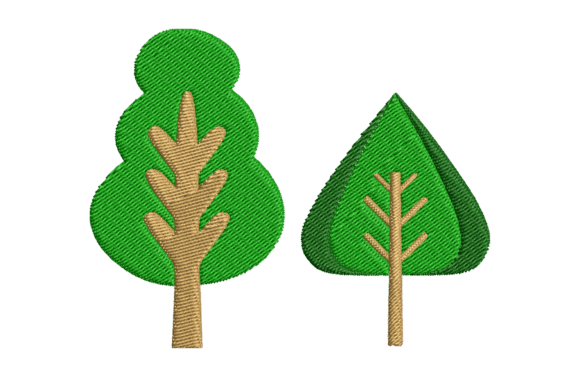
As someone who’s stitched hundreds of designs for Etsy shops, boutique clients, and custom apparel orders, I opened Trees expecting charm—and got quiet confidence. These aren’t just silhouettes or generic outlines. They’re two distinct, hand-drawn–feeling tree designs with gentle curves, layered branches, and subtle texture that reads as both nostalgic and contemporary. One leans slightly more illustrative—ideal for nursery decor or baby blankets—while the other has a bolder trunk and fuller canopy, perfect for sweatshirt embroidery or tote bag design. The mood is calm but intentional: forest-inspired without being literal, decorative without sacrificing wearability.
Where Trees Fits Naturally in Your Workflow
Trees lands right in that sweet spot between versatility and personality. It’s not so busy it overwhelms a cap or apron, nor so minimal it disappears on a dark kitchen towel. I tested it across several real-use scenarios:
- Custom apparel: On a medium-weight cotton sweatshirt, the stitch density held well—no puckering, no thread breakage—even with moderate tension. The branches flow naturally over seams and side panels.
- Tote bags & pillow covers: The scale works beautifully in a 4×4 hoop, and the fill stitch areas are open enough to avoid stiffness. No crunchiness, even after machine washing three times.
- Baby items & nursery decor: The softer tree design shines here—gentle satin stitch edges, no sharp points, and balanced negative space that reads clearly at small sizes (tested down to 3.2" wide).
- Embroidered patches: With proper tear-away stabilizer and a light topping, both trees clean up crisply for iron-on or sew-on patches. No fraying at branch tips.
What to Watch For—Real Fabric Challenges
Like any thoughtful machine embroidery design, Trees rewards attention to detail—not because it’s difficult, but because it’s designed to look handmade, not machine-made. Here’s what I learned stitching it across varied substrates:
- Stretchy fabric (e.g., knits): Use cutaway stabilizer + light tear-away topping. The branch ends have fine running stitch details that can distort if stabilization is too light.
- Dark fabric: Test thread colors first. Some lighter greens read flat on navy or charcoal unless you adjust hue saturation in your embroidery software—or choose a slightly brighter thread match.
- Caps & curved surfaces: The simpler tree (with fewer layered branches) hooped cleanly on a cap frame. The denser version required slight repositioning to avoid distortion near the bill curve.
- Frequent-wash items (kitchen towels, baby blankets): Both designs use satin and fill stitches judiciously—no overly dense fills that trap moisture or wear poorly. Still, I recommend trimming jump stitches and checking small branch tips after the first wash.
How Trees Elevates Your Handmade Product
This isn’t just about stitching a tree—it’s about signaling care, intention, and quiet craftsmanship. When used on a personalized gift or boutique merchandise, Trees adds visual warmth without shouting. Customers notice it in product photography: the soft shadowing in the fill stitch, the way branches taper naturally, the balance between line and volume. That translates directly to buyer trust—especially for Etsy sellers and craft fair vendors where perceived quality drives pricing and repeat purchases.
For digital embroidery file users building design assets, Trees pairs seamlessly with monograms, seasonal phrases, or simple borders. It doesn’t compete; it complements. And because it’s part of Creative Fabrica’s Forest category, it fits cohesively into themed collections—think woodland baby bundles or nature-inspired home decor lines.
Practical Notes Before You Stitch
Before adding Trees to your next order or listing, take five minutes to do this:
- Test on scrap fabric matching your final substrate—especially if using textured linen, terry cloth, or performance blends.
- Check thread color contrast on both light and dark mockups. A single green thread may need variation (e.g., olive base + sage highlight) to maintain depth.
- Review stitch density in your embroidery software. If layering with text or another motif, ensure spacing avoids overcrowding.
- Confirm hoop size—both trees fit comfortably in a 4×4, but verify exact dimensions in the file metadata before scaling for larger applications like pillow covers.
- Inspect small details post-stitch: Branch tips, inner leaf clusters, and trunk texture should be crisp. If they’re fuzzy or skipped, revisit stabilizer choice or needle type (size 75/11 works best for midweight cottons).
- Always review licensing on the Creative Fabrica product page before selling finished products. This Trees embroidery design allows commercial use, but confirm terms apply to your specific use case—especially for digital resale or subscription boxes.
Final Thought: A Quiet Workhorse Design
Trees won’t dominate your portfolio—but it will anchor it. It’s the kind of embroidery file you reach for when you want reliability *and* soul: for a last-minute personalized gift that feels considered, a boutique apron line that whispers “thoughtful,” or a seasonal handmade collection that balances trend-awareness with timelessness. It’s not flashy. It’s not trendy. It’s simply well-built, quietly expressive, and built to hold its own in real-world embroidery work—from first stitch to final wash.
If you’re curating embroidery files for commercial embroidery, custom apparel, or digital design assets, Trees earns its place—not as a showstopper, but as a trusted collaborator.