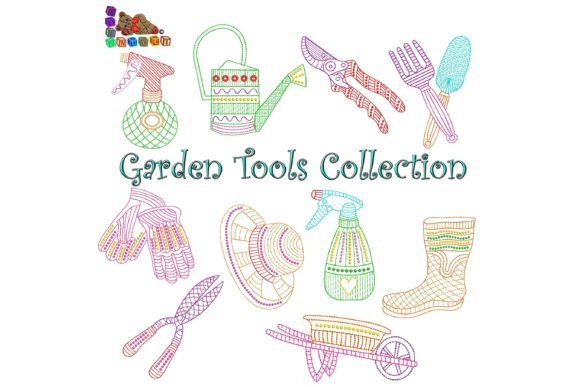
Garden Tools Collection
First Impressions: Whimsical, Warm, and Ready for Real Fabric
Opening the Garden Tools Collection file feels like stepping into a sunlit potting shed—there’s an immediate sense of grounded charm. These aren’t stiff, technical line drawings of trowels and rakes; they’re friendly, slightly rounded, multicolor interpretations with gentle curves and intentional breathing room between elements. The mood is cheerful but not cutesy, rustic but not overly distressed—ideal for makers who want garden-themed embroidery that reads as thoughtful, not novelty. As a designer who’s stitched hundreds of themed collections, I immediately saw this working on kitchen towels, unisex sweatshirts, and baby-soft cotton aprons—not as filler, but as a quiet signature detail.
A Tote Bag Test: Where Personality Meets Practicality
Last week, I prepped a linen-cotton tote for a local nursery boutique using Garden Tools Collection as the centerpiece. I chose the small trowel-and-flower combo (centered just below the handle seam) and stitched it on medium-weight fabric with tear-away stabilizer. What stood out wasn’t just how cleanly the satin-stitched tool handles held up—it was how the fill-stitch leaves retained texture without bleeding, even at 4.2" wide. Customers paused at the display. One said, “It looks hand-drawn—but precise.” That’s the sweet spot: handmade warmth backed by solid digitizing. For Etsy sellers or small shop owners, that kind of quiet credibility matters more than flashy complexity.
Where It Shines—and Where to Pause
Garden Tools Collection excels on stable, midweight fabrics: tea towels, canvas totes, cotton sweatshirts, and denim jackets. On those surfaces, the multicolor balance—earthy greens, terracotta browns, soft sky blues—feels intentional, not arbitrary. It reads well in both natural light and boutique lighting.
- Custom apparel: Works beautifully on crewneck sweatshirts—especially when placed left-chest or centered above a pocket. Avoid full-back placements unless you’ve confirmed stitch density won’t overwhelm lightweight knits.
- Baby embroidery & nursery decor: The rounded shapes and open negative space make it safe for onesies and pillow covers—but skip dense satin borders on ultra-soft bamboo blends unless you’ve tested stabilizer pairing first.
- Embroidered patch potential: Yes, absolutely. The clean outlines and moderate detail level translate well to iron-on or sew-on patches, especially when backed with fusible web and finished with merrow edging.
- Holiday or wedding gifts: Think herb-themed bridal shower towels or “Grow Together” garden aprons for couples. The collection’s warmth reads as personal, not mass-produced—key for gift buyers scanning Etsy listings.
Fabrics That Ask for Extra Care
This isn’t a one-size-fits-all design. On stretchy jersey or thin voile, the tighter fill areas—like the soil mound beneath a spade—can pucker if stabilizer isn’t layered thoughtfully. Dark fabrics demand attention to thread contrast: those soft sage greens fade against navy unless you swap to a slightly brighter olive or add a subtle underlay. And curved surfaces? Caps and low-profile beanies need simplified versions—this collection wasn’t built for extreme distortion. If you’re planning cap embroidery, test the smallest tool motif first, and consider reducing density by 10–15% in your software.
Design Assets That Build Trust
When customers see Garden Tools Collection on a handmade product, they don’t just register “garden theme”—they register care. The spacing between tools feels considered, not cramped. There’s no visual clutter, no tiny unreadable labels, no over-digitized fussy details that vanish after three washes. That clarity builds trust: it tells buyers this wasn’t slapped together for a trend, but chosen because it supports the item’s purpose. For craft business owners, that perception directly affects pricing power, repeat orders, and word-of-mouth referrals.
Designer Notes You’ll Actually Use
Before stitching your first finished product—or listing it online—do these five things:
- Run a test on scrap fabric matching your final project’s weight and weave. Check for puckering, thread breaks, and color bleed—especially where green meets brown.
- Review stitch density in your editing software. If fills look overly tight on screen, they’ll feel stiff on fabric. A light pass with density reduction often improves drape.
- Confirm hoop size compatibility. Some motifs sit comfortably in a 4x4 hoop; others may need 5x7 for optimal spacing—check before hooping a delicate apron front.
- Inspect corners and interior curves. Are small leaf tips crisp? Do tool handles taper cleanly? If not, a quick manual edit in your software saves re-stitching later.
- Preview in black-and-white mockups. Does the composition hold up on dark fabric? Does it read clearly at thumbnail size for your Etsy or Instagram listing?
Licensing & Commercial Use: A Quiet Reminder
The product description says “Create beautiful Gardening projects”—and it does. But as a designer who’s fielded client questions about copyright for years, I’ll say this plainly: Always verify licensing terms before selling finished items or bundling Garden Tools Collection into digital embroidery kits. If you’re an Etsy seller offering personalized garden-themed gifts, confirm whether the license permits commercial embroidery use. If you’re building design assets for a boutique brand, double-check whether redistribution or derivative work is allowed. Clarity here prevents costly pauses down the line.
Final Thought: A Thoughtful Tool, Not Just a Trend
Garden Tools Collection doesn’t shout. It invites. It fits naturally into real-life making—whether you’re stitching a single tea towel for a friend, producing 50 embroidered totes for a farmers’ market stall, or designing printable mockups for a digital embroidery shop. Its strength lies in restraint: enough detail to feel special, enough openness to breathe on fabric, and enough warmth to land as genuine. For embroidery designers and creative entrepreneurs who value substance over sparkle, this is the kind of Farm-category embroidery that earns repeat use—not because it’s trendy, but because it works, quietly and well.